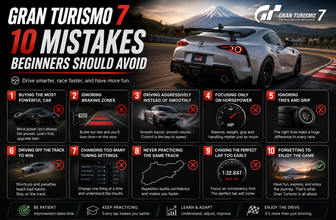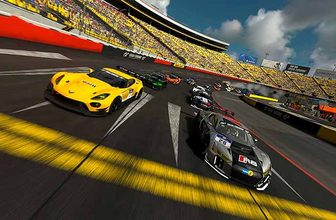

Becoming a faster driver in Gran Turismo 7 is not simply a matter of buying a faster car. The game offers an enormous selection of powerful machines, advanced tuning options, and challenging circuits, but raw horsepower can only take you so far. The biggest improvements usually come from understanding how a car behaves, learning the track, becoming more consistent under braking, and developing the patience to drive smoothly.
At first, improving your lap times can feel frustrating. You may push harder, brake later and accelerate earlier, only to discover that your lap is actually slower. This is one of the most important lessons in Gran Turismo 7: being aggressive is not always the same as being fast. Once you begin to understand where time is really being gained and lost, driving becomes much more rewarding.
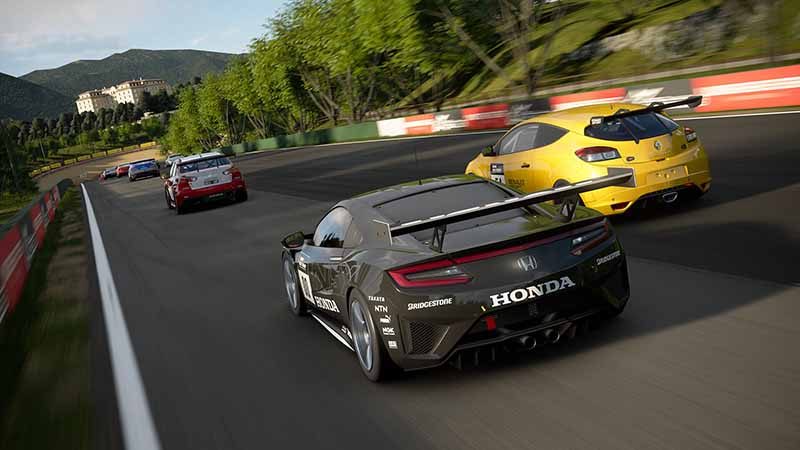
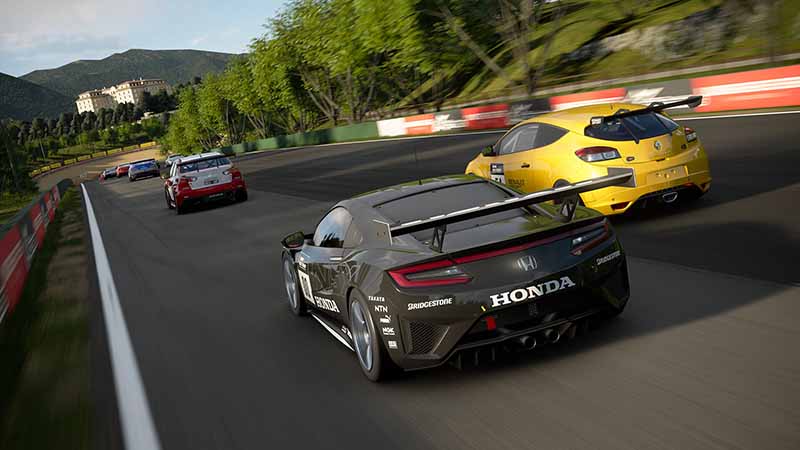
Learn the Track Before Trying to Set Fast Times
One of the best ways to become a better driver is to stop treating every circuit as a simple sequence of corners. Instead, learn to understand the entire track as one continuous flow.
Before worrying about lap times, spend some time driving around a circuit without trying to break records. Pay attention to the corners, elevation changes, braking zones, kerbs and long straights. Notice which corners are followed by another corner and which ones lead onto a long section where acceleration is particularly important.
Learning the track also means remembering braking references. Look for visual markers such as distance boards, kerbs, barriers or changes in the scenery. These references give you something consistent to work with when approaching a corner at high speed.
Eventually, you should be able to approach a corner knowing approximately where you want to brake, where you want to turn in and where you want the car to begin accelerating. This removes uncertainty and allows you to concentrate on refining your technique.
Master Braking
Braking is one of the most important skills in Gran Turismo 7, and it is also an area where many beginners lose a surprising amount of time.
A common mistake is braking too early because you are afraid of missing the corner. While this may keep you on the track, it also means you spend too much time travelling slowly. The opposite mistake is braking too late and entering the corner with too much speed, forcing you to slow the car while turning.
The goal is to find the balance.
Try braking firmly in a straight line and gradually releasing the brake as you approach the corner. This technique, often called trail braking, allows you to continue slowing the car while beginning to turn. The key is smoothness. If you suddenly release the brake or turn the steering wheel aggressively, you can upset the balance of the car and lose grip.
Rather than trying to brake later immediately, first concentrate on braking at the same point every lap. Consistency gives you a reliable starting point. Once you become comfortable, you can gradually move the braking point deeper into the corner.
Understand Racing Lines
A good racing line can make a dramatic difference to your lap times. The basic idea is to use as much of the track as possible to create a smoother and faster path through a corner.
For a typical corner, you will often approach from the outside, move toward the inside apex and then allow the car to move back toward the outside on exit. This creates a wider radius and allows you to carry more speed.
However, not every corner should be approached in exactly the same way.
Some corners require a late apex because the following straight is more important than the corner itself. In these situations, sacrificing a little entry speed can give you a much better exit. That extra speed then carries down the entire straight, potentially producing a significant improvement in lap time.
This is why it is important to think beyond the corner directly in front of you. The fastest line is often determined by what comes next.
Be Smooth With the Steering
One of the easiest ways to lose speed is to make unnecessary steering corrections. When a car moves around the track, it can be tempting to constantly adjust the steering wheel or controller. However, every unnecessary movement can affect the car’s stability.
Try to make your steering inputs deliberate and smooth. Turn into the corner once, position the car correctly and gradually unwind the steering as you approach the exit.
Smooth steering is especially important in high-speed corners. A sudden input can cause the tires to lose grip, forcing you to slow down. A controlled steering movement allows the car to remain balanced and maintain more speed.
This becomes even more noticeable when driving powerful rear-wheel-drive cars. Applying too much steering while accelerating can make the rear of the car unstable, so learning to combine steering and throttle smoothly is essential.
Learn to Control the Throttle
Getting back on the throttle early is important, but simply pressing the accelerator as hard as possible is not always the fastest solution.
When exiting a slow corner, your tires may not have enough grip to handle full power immediately. If you accelerate too aggressively, the car can begin to slide or lose traction. Even if you manage to keep the car under control, the resulting correction can cost valuable time.
Instead, try applying the throttle progressively. Start accelerating as you straighten the steering wheel, then increase throttle as the car becomes more stable.
With practice, you will develop a natural understanding of how much power you can use in different situations. This is particularly useful with high-performance cars, where the difference between a clean exit and a small slide can be significant.
Choose a Car That Matches Your Skill Level
Driving a very fast car does not automatically make you a faster driver. In fact, extremely powerful cars can sometimes make learning more difficult.
A car with predictable handling allows you to focus on braking, racing lines and consistency without constantly fighting the vehicle. Cars with moderate performance can be particularly useful when learning a new circuit.
Once you become comfortable, move gradually toward faster machinery. This gives you the opportunity to understand how additional power, weight and grip affect your driving.
It is also worth spending time with different types of cars. Driving front-wheel-drive, rear-wheel-drive and all-wheel-drive vehicles can teach you different techniques and help you understand how weight transfer affects handling.
Use Time Trials to Practice
If you really want to improve, spend time in practice or time trial sessions instead of always focusing on races.
A race introduces traffic, strategy and competition, which can make it difficult to understand exactly where you are losing time. A time trial removes those distractions and allows you to concentrate entirely on your driving.
After completing several laps, compare your performance. Think about where you are consistently slow. Is your braking point too early? Are you turning in too late? Are you losing traction on corner exit?
Try changing one thing at a time. If you change your braking point, racing line and throttle technique simultaneously, it becomes difficult to understand which adjustment actually helped.
Focus on Consistency
One extremely fast lap is exciting, but ten consistent laps are much more valuable.
If you can repeatedly drive within a small range of your best lap time, you are developing real control over the car. Consistency also becomes incredibly important during races. A driver who makes fewer mistakes can often finish ahead of someone who is theoretically faster but regularly runs wide or loses control.
Try setting yourself a simple goal: complete five or ten laps without leaving the track. Once you can do that comfortably, begin working on your pace.
This approach may seem slower at first, but it creates a much stronger foundation.
Improve Gradually
The most important thing to remember is that becoming a better driver takes time. You do not need to master every technique immediately.
Start by learning your braking points. Then work on your racing lines. After that, focus on throttle control and smoother steering. As these skills begin to become automatic, you can start experimenting with more advanced techniques and different car setups.
Gran Turismo 7 rewards patience. Every mistake is an opportunity to understand something about the car, the track or your own driving style.
Final Thoughts
Improving your driving skills in Gran Turismo 7 is ultimately about learning to drive with purpose rather than simply driving faster. The best drivers understand when to brake, how to position the car, when to turn, and how to gradually return to the throttle.
Learn each circuit, practice your braking, find consistent racing lines and concentrate on smooth inputs. Most importantly, do not become obsessed with shaving seconds off your lap immediately. Build your skills step by step and let the lap times improve naturally.
Once you begin to feel the car responding to your inputs and can predict how it will behave before entering a corner, Gran Turismo 7 becomes much more than a racing game. It becomes a constant challenge to find the perfect lap—and that pursuit of perfection is what makes every tenth of a second so satisfying.